Introduction to WiFi Calling Android
WiFi calling Android has changed how users make calls, especially in low-signal areas. Many people face dropped calls, weak network bars, and interruptions during important conversations. However, when a device supports WiFi calling, calls travel through an internet connection rather than mobile towers. As a result, users enjoy clearer audio, faster call connections, and stable communication indoors. This guide explains WiFi calling for Android in a simple, structured, and highly detailed way, helping readers activate, use, troubleshoot, and optimize their experience.
Article Specifications
| Topic | WiFi Calling for Android Devices |
|---|---|
| Technology | VoWiFi (Voice over WiFi) |
| Compatibility | Modern Android Smartphones |
| Primary Benefit | Improved Signal in Low-Coverage Areas |
What Is WiFi Calling Android and Why It Matters
WiFi calling Android lets a smartphone make and receive calls using a WiFi network. Instead of relying only on cellular signals, voice traffic moves through the internet. Consequently, voice becomes more stable, especially in basements, apartments, rural zones, and concrete buildings where mobile signals struggle.
How WiFi Calling Android Works
WiFi calling functions through VoWiFi technology. When a user enables it, the device automatically routes calls through available wireless internet. If WiFi becomes weak, the phone may switch back to mobile networks. Because of this automatic switching, communication continues uninterrupted.
Benefits of Using WiFi Calling on Android Devices
Users prefer WiFi calling Android because it boosts voice clarity and reduces dropped calls. Even when mobile signals fall to zero, WiFi keeps calls active. Additionally, international calls may cost less, depending on carrier policies. As a result, WiFi calling becomes ideal for home, office, travel, and remote environments.
How to Enable WiFi Calling on Android (Step-by-Step)
- Open Settings and go to Network & Internet.
- Tap Mobile Network or SIM & Network.
- Locate WiFi Calling and turn it on.
- Ensure the device uses a VoLTE/VoWiFi compatible SIM.
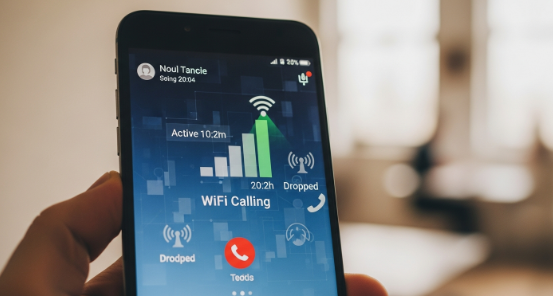
After enabling, the phone displays a WiFi calling symbol near signal bars during calls.
WiFi Calling Android vs Regular Mobile Calling
Regular cellular calling depends on tower coverage. Conversely, WiFi calling depends on wireless internet. When someone calls over WiFi, voice data travels digitally, so clarity improves. Meanwhile, mobile calling may lag in poor coverage areas. Because of this difference, users often keep WiFi calling on for reliability.
Best Conditions for WiFi Calling Android Performance
Strong and stable WiFi ensures smooth calling. Therefore, placing the router centrally enhances performance. Users should reduce interference caused by walls, electronic devices, and distance. Furthermore, using dual-band routers boosts signal quality across the home.
Does WiFi Calling Use Data
Yes, WiFi calling Android consumes internet bandwidth instead of mobile minutes. However, call data usage remains low. Short calls use only a small portion of available internet. Moreover, when using unlimited broadband, users worry less about consumption.
Troubleshooting WiFi Calling Android Not Working
- Restart the phone to refresh network settings.
- Turn Airplane Mode ON, then enable WiFi and WiFi calling only.
- Update system software for compatibility improvements.
- Try a different WiFi network to check connectivity.
If issues persist, checking with the carrier may help because some operators restrict the service regionally.
Security and Privacy in WiFi Calling Android
WiFi calling uses encrypted data packets, so conversations remain secure. Even public WiFi supports calling; however, safe networks work better. Since encryption protects call content, privacy remains intact. Therefore, users can trust WiFi calling as a secure method of communication.
Is WiFi Calling Available on All Android Phones
Most modern Android smartphones support WiFi calling. Older models may lack this feature. Therefore, checking device specifications before enabling becomes important. Many brands include WiFi calling by default, so compatibility increases year after year.
Conclusion
WiFi calling Android improves communication everywhere. Users who enable WiFi calling enjoy stunning voice quality, fewer disruptions, and reliable connectivity indoors. Because setup takes seconds, switching to WiFi calling should become a priority.
Frequently Asked Questions
Yes, it works perfectly through WiFi even if cellular signals are weak or non-existent.
Yes, stable WiFi dramatically reduces dropped calls and audio distortion in indoor environments.
Most carriers allow free domestic WiFi calling. However, charges may vary for international calls based on your plan.
Usage may slightly increase battery consumption, but this varies by device and the strength of the WiFi signal.
Almost all modern networks do, but a strong, stable connection offers the best voice quality.